 GeneTex

|
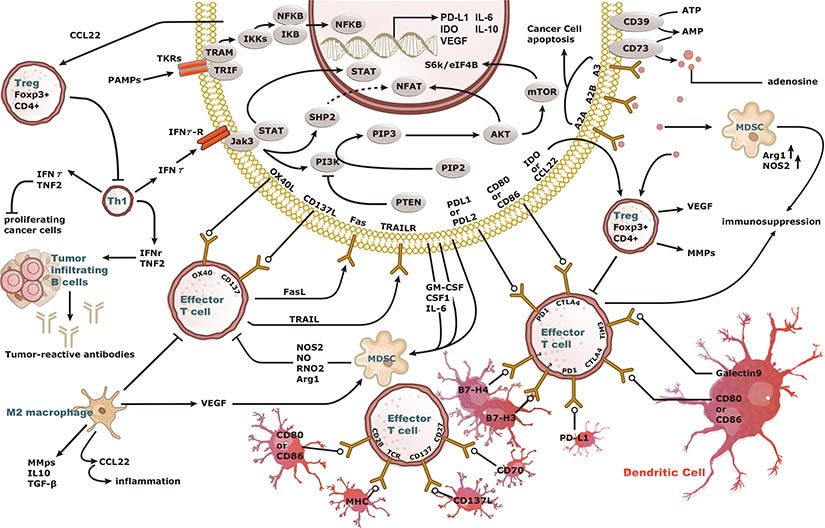
Increasing knowledge of how cancer cells escape immune destruction has significantly driven the evolution of cancer immunotherapy. In particular, studies describing how different immune checkpoints, including the PD-1 and CTLA-4 pathways, function to attenuate T cell antitumor activity have revealed novel opportunities for therapeutic intervention. Researchers have made promising strides in inhibiting these checkpoints to unleash the T cells’ tumor-killing potential. Given that both radiotherapy and chemotherapy can also mobilize antitumor T cells, there is great excitement that checkpoint inhibition and other immunomodulatory approaches can be combined with conventional modalities to maximize clinical outcomes for a number of malignancies.
GeneTex Proudly Provides an Outstanding PD-L1 Antibody for Your Research
- Knockout/knockdown validation
- Highly specific and sensitive
- Reactive with human and mouse tissues
- Optimized IHC protocols for both manual and automated staining
- Backed by extensive peer-reviewed citations
|
|
|
|
||||||||||||||||
![PD-L1 antibody [HL2985]](/upload/media/research/Cancer/Cancer_Immune_Checkpoints/CancerImmuneCheckpoints_255x255_01.jpg)
![PD-L1 antibody [HL1041]](/upload/media/research/Cancer/Cancer_Immune_Checkpoints/CancerImmuneCheckpoints_255x255_02.jpg)
![PD-L1 antibody [H302] HistoMAX™](/upload/media/research/Cancer/Cancer_Immune_Checkpoints/CancerImmuneCheckpoints_255x255_03.jpg)
![PD-L1 antibody [HL2293]](/upload/media/research/Cancer/Cancer_Immune_Checkpoints/CancerImmuneCheckpoints_255x255_04.jpg)
|
|
|
|
||||||||||||||||
![PD1 antibody [HL4386]](/upload/media/research/Cancer/Cancer_Immune_Checkpoints/CancerImmuneCheckpoints_255x255_05.jpg)
![LAG3 antibody [HL3932]](/upload/media/research/Cancer/Cancer_Immune_Checkpoints/CancerImmuneCheckpoints_255x255_06.jpg)
![TIGIT antibody [HL2657]](/upload/media/research/Cancer/Cancer_Immune_Checkpoints/CancerImmuneCheckpoints_255x255_07.jpg)
![CTLA4 antibody [HL2732]](/upload/media/research/Cancer/Cancer_Immune_Checkpoints/CancerImmuneCheckpoints_255x255_08.jpg)
|
|
|
|
||||||||||||||||
![CD47 antibody [HL6267]](/upload/media/research/Cancer/Cancer_Immune_Checkpoints/CancerImmuneCheckpoints_255x255_09.jpg)
![CD73 antibody [HL2493]](/upload/media/research/Cancer/Cancer_Immune_Checkpoints/CancerImmuneCheckpoints_255x255_10.jpg)
![SIRP alpha antibody [HL3149]](/upload/media/research/Cancer/Cancer_Immune_Checkpoints/CancerImmuneCheckpoints_255x255_11.jpg)
![CD28 antibody [HL1589]](/upload/media/research/Cancer/Cancer_Immune_Checkpoints/CancerImmuneCheckpoints_255x255_12.jpg)