 GeneTex
The SARS-CoV-2 Omicron Variant
The SARS-CoV-2 Omicron variant (B.1.1.529) was designated the fifth variant of concern (VOC) by the WHO in November, 2021 (1). Its genome contains more than 50 mutations, including at least fifteen mutations in the spike protein receptor-binding domain (RBD). Omicron subvariants have replaced the previous VOCs and have become dominant across the planet due to enhanced transmissibility and immune evasion. Of the original five recognized Omicron subvariant designations (i.e., BA.1, BA.2, BA.3, BA.4, and BA.5), new lineages derived primarily from BA.2 and BA.4/5 are increasing in prevalence in different world regions.
|
Omicron BA.4/5 Subvariants BQ.1 and BF.7 |
BA.4/5 lineage subvariants account for about 77.1% of all Omicron-related lineages. BQ.1 and BF.7 are two of several BA.4/5 subvariants that are of particular concern, due primarily to their increased immune evasion and monoclonal antibody resistance capabilities. BF.7 acquired the R346T, and BQ.1 both the K444T and N460K, spike mutations. Recent work indicates that the N460K mutation plays a significant role in the enhanced neutralization resistance of BQ.1 (2). In addition, variant splintering, where distinct subvariants rise to dominance in different world regions, undermines unified vaccine design and treatment regimen plans.
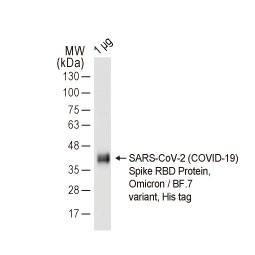
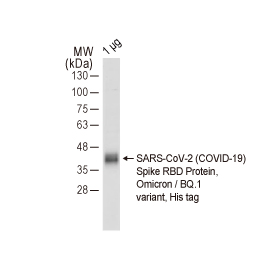
GeneTex continues to expand its inventory of antibodies and recombinant proteins to support SARS-CoV-2 research. New additions are Omicron spike and nucleocapsid recombinant proteins for the BQ.1 and BF.7 lineages described above. The recombinant spike proteins are available in RBD only or ECD (Extracellular Domain) formats, with the ECD versions being trimeric. The His tag is located at the C-terminus. To learn more about these and other GeneTex reagents for Omicron research, please see the highlighted products below and visit our website at www.genetex.com.
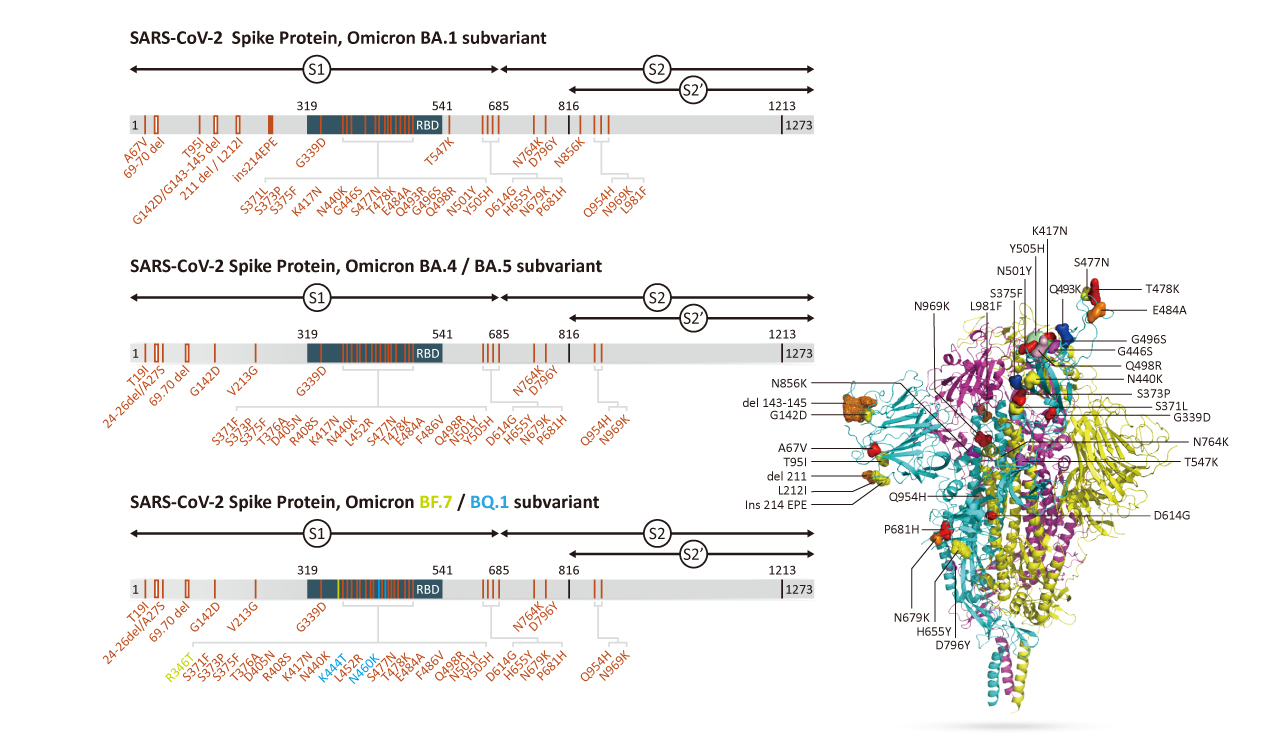
Figure 1. Spike mutation sites in Omicron subvariants |
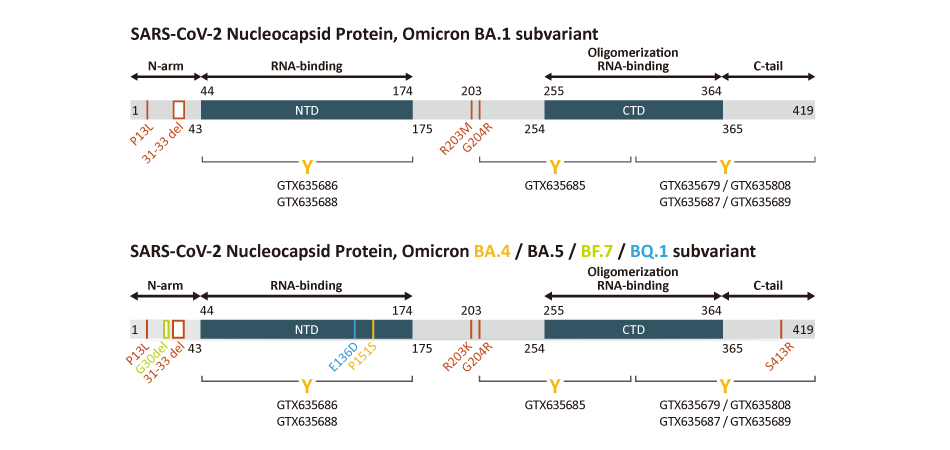
Figure 2. Nucleocapsid protein mutation sites in Omicron subvariants |
GeneTex has a wide range of recombinant antibody and protein reagents for Omicron research. Notably, nucleocapsid antibodies whose immunogens do not contain any Omicron mutation sites are shown in Figure 2.
|
Recombinant spike proteins (trimer) derived from different SARS-CoV-2 variants were assayed by indirect ELISA using the specified GeneTex monoclonal antibodies.
| ● | Strong detection. Defined as OD450 value >1 when 1μg/ml protein was used. | |
| ○ | Weak detection. Defined as OD450 value >1 when 4μg/ml protein was used. | |
| X | No detection. Defined as OD450 value <1 when 4μg/ml protein was used. |
|
Highlighted Products |


|
|
|
|
||||||||||||||||
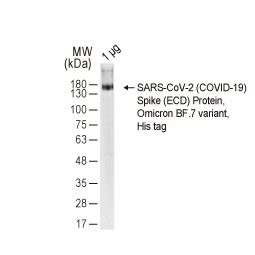
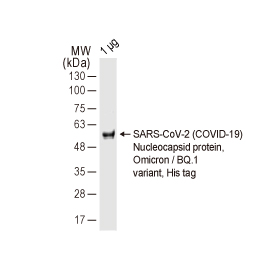
|
|
|
|
||||||||||||||||||
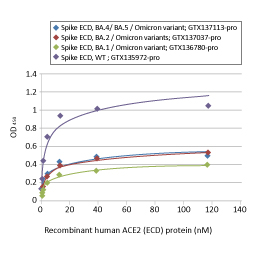
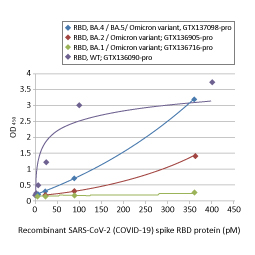
![SARS-CoV-2 (COVID-19) Spike RBD antibody [HL1014]](/upload/media/MarketingMaterial/Newsletter/2021/OmicronVariant/GTX635807.jpg)


![SARS-CoV-2 (COVID-19) Spike RBD antibody [HL1004]](/upload/media/MarketingMaterial/Newsletter/2021/OmicronVariant/GTX635793.jpg)
|
Lateral Flow Assay (Recommended Nucleocapsid Antibody Pairs) |


|


|
Omicron Spike and Nucleocapsid Recombinant Proteins |
|
Reagents that detect Omicron |

|
|
Omicron Cell Pellet Block |
|
|
Omicron ELISA Kit |
|
|
References: |
| bioRxiv. 2022 Oct 20;2022.10.19.512891. doi: 10.1101/2022.10.19.512891. Preprint |